Here’s the thing. The PR strategy that works at one stage may not be workable for the next stage. Why? Because an agency that was adept at building initial awareness may not have the expertise needed to support a company entering a totally new markets or perhaps managing major crisis situations.
That is why getting the right PR partner is a critical decision for founders.
It is not about the industry rankings or impressive client lists. It is about finding a team that understands where your startup stands today and what it needs to achieve next.
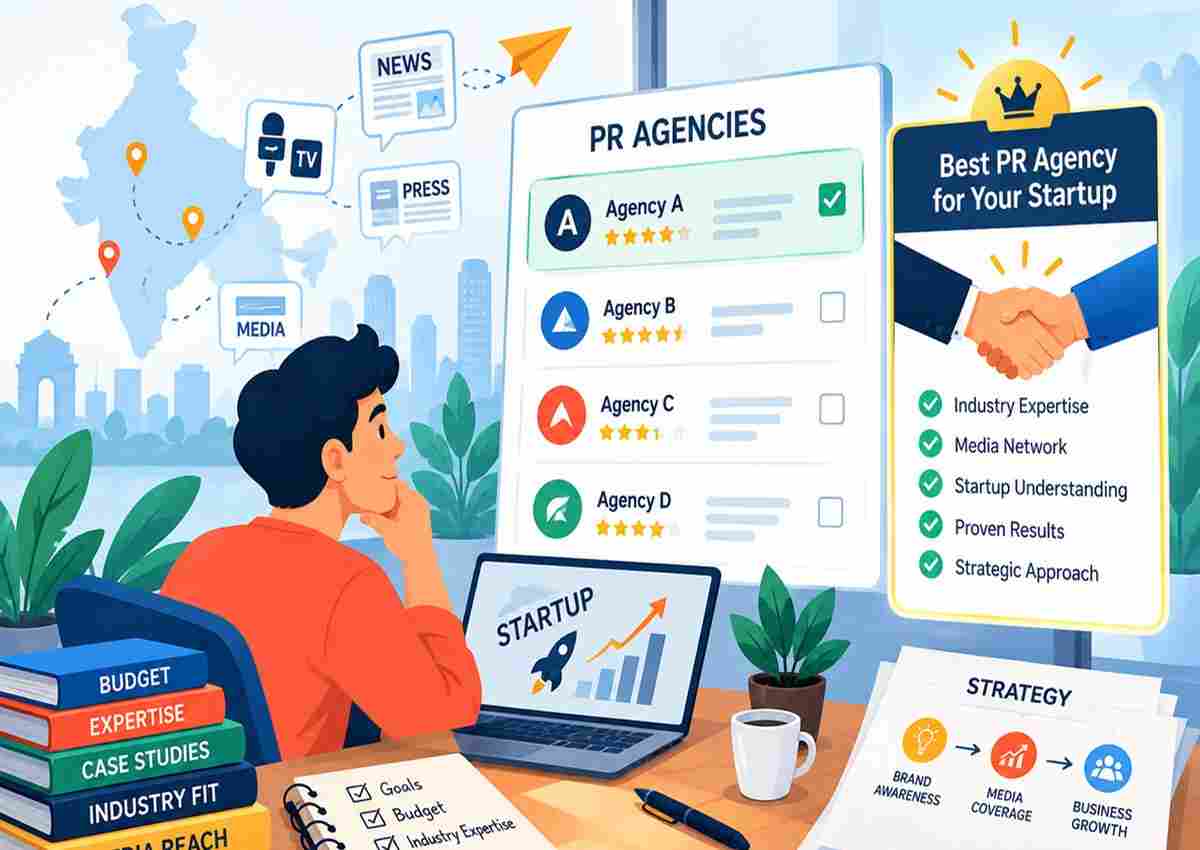
Here are some steps that startups can follow to tap the right PR partner.
- Understanding the Growth Stage of the Startup
The first step – take stock of your business.
The brand narrative you build and the audiences you need to tap, all depends on the growth stage of the startup.
As opposed to a well-established business that focusses on expansion, leadership visibility or reputation management, an early-stage startup’s focus areas might include:
- Introducing its proposition
- Explaining the problem it solves
- Building a strong brand image and credibility
So, the first step is to jot down the business priorities that need to be addressed right away and the communication challenges that may come in the way. This will help you evaluate agencies based on what they can bring to the table and if they can actually manage a startup, rather than their overall reputation alone.
Also Read – How to Choose Among the Top Public Relations Agencies in India for Your Startup
- Look for Experience Relevant to Your Stage
Every agency has a different way of working with startups.
Some are experts in early-stage businesses, while others have dealt more with funded companies, established scale-ups or large enterprises.
When searching for the top PR firms for startups, carefully analyse the types of businesses they have supported and the challenges they have addressed. Have they helped in building founder visibility from ground up? Have they supported funding announcements, product launches or market expansion? Do they have any experience in your industry?
The key is to look for the right set of offerings that will help your business at a particular stage.
- Check Whether Its Services Match Your Immediate Priorities
Startups do not always need a long complex PR programme from day one.
What they primarily need is:
- Focused engagement around a product launch
- Funding announcement
- Building founder visibility
Plus, based on the growth stage, startups may need media relations, thought leadership, digital PR, executive profiling, crisis communication or support for a major business announcement other than funding announcement.
Some top PR companies in India offer integrated services spanning PR, digital communication, content and reputation management. This can be useful when your needs extend beyond traditional media relations.
Look for an agency that can explain which services are necessary now, which can wait and how the approach can evolve as the startup grows.
- Scout for the Team That Will Work ‘With You’
Here is an important fact – an agency’s credentials may help you shortlist it, but the team handling your account will determine the quality of the working relationship.
Ask who will lead the engagement, how involved senior team members will be and who will manage day-to-day execution. Understand the team’s experience with businesses at your stage and how it handles approvals, feedback and urgent requests.
The top PR firms for startups should offer a balance of strategic counsel and hands-on execution. You need a team that can make a plan, write with impact, build lasting media relationships and help you make informed decisions about what deserves attention and what can be put aside for the moment.
- Understand How the Agency Measures Results
PR outcomes must work in the direction that bolsters your business objectives.
Check how the agencies report results and what their reporting includes. Understand their metrics.
Look for an approach that explains not only what was delivered, but also what the outcomes mean and how they will inform future activity.
A top PR agency in India should set realistic expectations. It should not guarantee editorial coverage or suggest that PR alone will deliver funding, sales or business growth. Instead, it should explain how communication can support those objectives and how progress will be assessed.
- Consider Budget, Flexibility and Long-Term Fit
For startups, every investment has to be carefully considered.
Before getting into a partnership with a PR firm, focus on –
- understanding the scope of work
- their team structure
- reporting frequency
- any additional costs
Catch the nuances. A lower-cost engagement may be suitable for a specific project, while a longer-term retainer may make more sense when the startup needs consistent communication.
Flexibility is equally important. Your priorities at the seed stage may be very different from those after a major funding round or market expansion. The agency should be able to revisit objectives and adjust the programme as your business evolves.
When comparing top PR companies in India, consider whether they are interested in building a lasting partnership or simply selling a predefined package. The right fit should be able to support your current priorities without losing sight of your longer-term ambitions.
- Don’t Just Fall for Rankings and Website Promises
Rankings, awards and website promises can be attractive. However, this can only help you discover potential partners. Not the right partners.
Study the case studies if the agencies and understand the agency’s role in the work. Look at the challenge, the strategy, the execution and the outcomes.
One way startups can really understand about the PR firm is by speaking with current or former clients about the agency’s communication, reliability and ability to respond to feedback.
Be cautious of promises of guaranteed front-page coverage, instant credibility or a fixed number of business leads. A responsible agency will explain all the variables and focus on building a realistic plan.
Read More – How the Best Public Relations Firms Create PR Strategies
Conclusion
Selecting a PR agency that meets your demands is a smart decision. It is not about finding the biggest agency. It is not about finding the one with the longest client list.
It is about the team that understands your growth stage. The one that grasps your communication priorities and help your business build a strong image as it flourishes.
The top PR agency in will understand that an early-stage business needs to establish its identity, while a growing company may need to make its position stronger.
Take the time to assess the agency’s thinking, team and flexibility before making a decision.
Frequently Asked Questions
- When should a startup hire a PR agency?
A startup can hire a PR agency when it has a clear list of business and communication objectives. These include building brand awareness, launching a product, announcing funding or making founder a known face amongst the audience. Once these objectives are clear, startups can find a PR partner that suits their demands.
- How do I choose among the top PR firms for startups?
Compare their experience with businesses at your growth stage, understanding of your industry, proposed strategy, team structure, reporting approach and ability to work within your budget.
- What should startups expect from PR services?
Depending on the brief, services may include media relations, founder profiling, thought leadership, product announcements, digital PR and reputation management. The scope should reflect the startup’s immediate priorities.
- How much does a PR agency in India cost for a startup?
Costs vary based on the agency, scope of work, team involvement and duration of the engagement. Startups should request a clear proposal outlining deliverables, fees, reporting and any additional costs before committing.