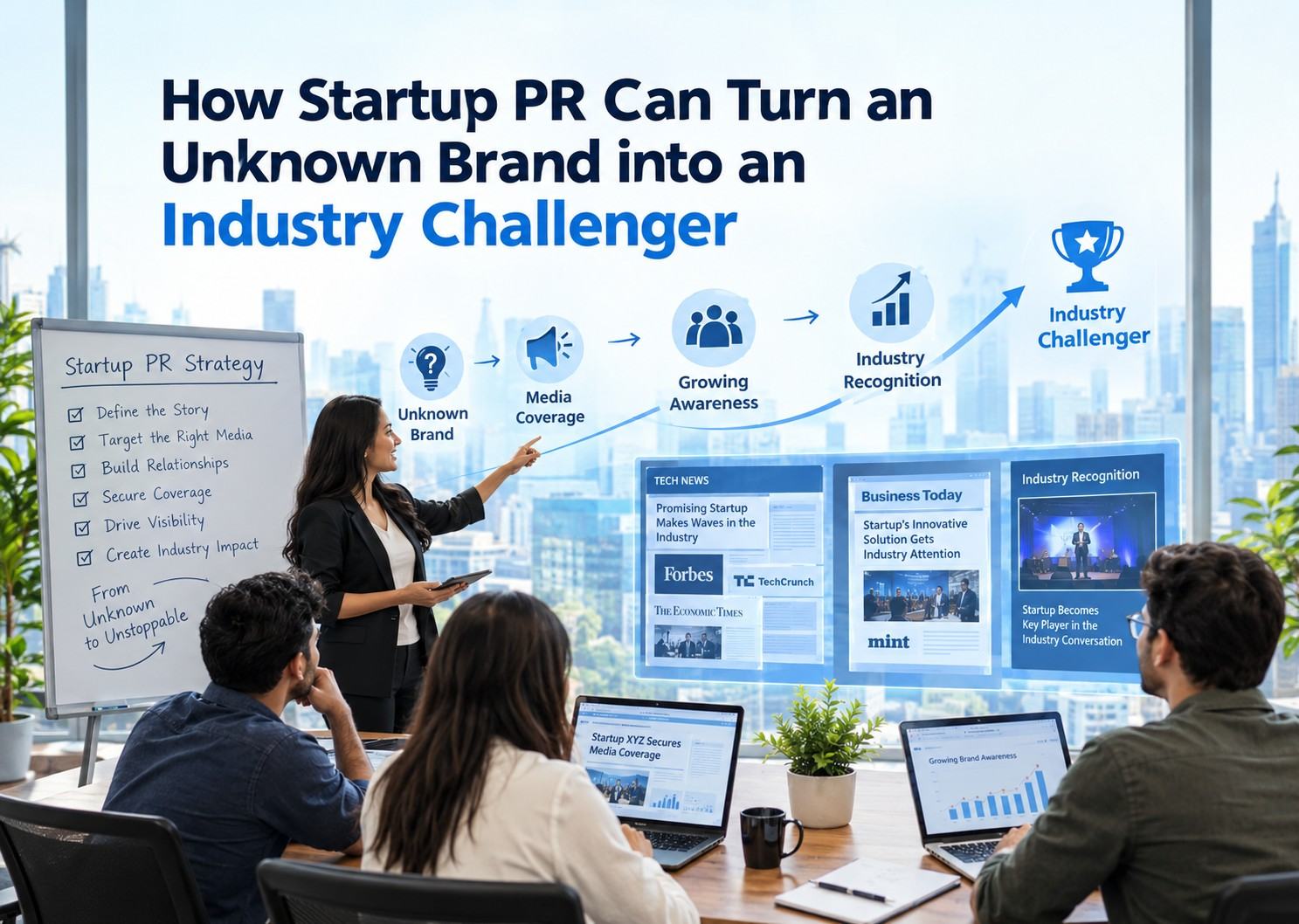
A young company trying to get its first customers has a very different communication challenge from a startup preparing to enter international markets. At one stage, the priority may be simply getting the brand noticed. At another, it could be building founder credibility, attracting investors, managing rapid growth or protecting a reputation that has become increasingly visible.
This is why effective PR cannot follow a one-size-fits-all approach. The best public relations firms understand that communication needs to evolve alongside the business, with each stage requiring a different story, audience and set of priorities.
Why Startups Need Stage-Specific PR Strategies
A startup’s growth stage influences almost every aspect of its communication strategy.
An early-stage company may have little brand recognition and limited media interest. A growing startup may have customer traction and data that can support stronger stories. A more established company may need to differentiate itself in a crowded category while managing a larger set of stakeholders.
Trying to communicate the same way throughout these stages can make PR feel disconnected from the business.
Instead, startups need a strategy that evolves with their goals.
- Early Stage: Building Awareness
In the early stages, most startups have one fundamental challenge: people need to know they exist.
The company may have a strong product or an interesting idea, but limited awareness among customers, investors and the wider industry.
At this stage, PR can focus on:
- Introducing the brand and its purpose
- Building founder visibility
- Explaining the problem the startup is solving
- Identifying relevant industry conversations
- Establishing relationships with relevant media
Founder stories can be particularly useful here. The journey behind the startup, the problem that inspired its creation and the founder’s perspective on the industry can give journalists and audiences a reason to take notice.
The objective is to create an initial layer of awareness and credibility.
Know More – How to Choose the Right Digital PR Agency for Your Startup
- Traction Stage: Showing Why the Startup Matters
Once a startup begins gaining customers, partnerships or market traction, its PR story can become more substantial.
Startups at this stage may have access to useful data, customer insights, growth figures or success stories that can support stronger media narratives.
PR strategies may include:
- Business and product announcements
- Customer success stories
- Industry research and data
- Founder thought leadership
- Expert commentary
- Media interviews
This is also a stage where startups can begin building a more distinct position within their category.
- Growth Stage: Establishing Category Leadership
As the startup grows, simply generating awareness may no longer be enough.
The company may now be competing with established businesses and other fast-growing players. Its communication needs to demonstrate expertise, differentiation and relevance.
This is where best PR firms in India can help startups move from announcement-led communication to reputation-led PR.
The strategy may include:
- Thought Leadership: Founders and senior leaders can contribute perspectives on important industry developments, helping the company become associated with specific areas of expertise.
- Data-Led Storytelling: Proprietary research, customer trends and business data can provide credible material for media stories and industry conversations.
- Executive Visibility: Interviews, speaking opportunities, podcasts and opinion pieces can help establish leaders as recognisable voices beyond their own company.
- Stronger Media Relationships: As the company becomes more newsworthy, maintaining meaningful relationships with journalists and industry publications becomes increasingly important.
The goal is to make the startup part of the category conversation rather than simply another company seeking coverage.
- Expansion Stage: Entering New Markets
When a startup expands into new cities, regions or countries, its PR strategy needs to evolve again.
A company that is well known in one market may be relatively unfamiliar in another. Its communication therefore needs to introduce the brand while demonstrating why it is relevant to the new audience.
PR can support expansion through:
- Local and regional media outreach
- Market-specific storytelling
- Founder and executive positioning
- Local industry partnerships
- Thought leadership
- Customer and market insights
Understanding the local media ecosystem is particularly important. What attracts attention in one market may not necessarily work in another.
The strategy should therefore balance a consistent brand identity with communication that feels relevant to the new market.
- Established Stage: Protecting and Strengthening Reputation
As a startup becomes an established business, its reputation becomes an increasingly important asset.
The company may now have a larger customer base, more employees, greater media attention and a wider range of stakeholders. With greater visibility also comes greater scrutiny.
At this stage, PR can focus on:
- Corporate reputation
- Executive communications
- Crisis preparedness
- Stakeholder engagement
- Employer reputation
- Industry leadership
- Long-term brand positioning
Communication also becomes less reactive. Instead of waiting for announcements or news moments, the company can proactively shape conversations around the issues and areas where it wants to be recognised.
Read More – How to Choose the Best PR Agency for Tech Startups in India
How the Best Public Relations Firms Adapt Their Approach
The top PR firms in India do not simply apply the same playbook to every startup.
They consider factors such as:
- Business objectives: What does the company need PR to help achieve?
- Target audiences: Who needs to know about the brand at this stage?
- News value: What developments or insights can create genuine media interest?
- Brand maturity: How established is the company within its category?
- Leadership visibility: Which founders or executives can contribute meaningfully to industry conversations?
- Market priorities: Is the company focused on one market or expanding into new ones?
These factors help determine the right mix of media relations, thought leadership, content, executive positioning and reputation management.
Measuring PR Across Different Growth Stages
PR success can also look different at different stages.
- For an early-stage startup, useful indicators may include relevant media coverage, brand mentions and awareness among target audiences.
- For a growing company, thought leadership visibility, quality of coverage, share of voice and stakeholder engagement may become more important.
- For an established business, reputation, executive visibility, stakeholder sentiment and crisis preparedness can take greater importance.
The metrics should therefore reflect the company’s current business objectives rather than simply focusing on the number of articles published.
Conclusion
Startups evolve fast. They launch and pivot, based on the need of the hour. The best public relations companies understand these changes and develop PR strategies based on where a startup is and where it is headed next.
Frequently Asked Questions
- Why should startups have different PR strategies at different growth stages?
Because their business goals, audiences and communication needs change as they grow.
- What do PR firms do for early-stage startups?
They can help build brand awareness, generate relevant media coverage and establish founder credibility.
- When should a startup invest in thought leadership?
Once founders have useful expertise, insights or perspectives that can contribute to industry conversations.
- How can PR support startup expansion?
PR can help introduce the brand to new audiences through local media, thought leadership and market-specific storytelling.
- How do startups measure PR success?
Metrics can include media quality, brand visibility, share of voice, audience engagement and reputation indicators.